The cards will be bought. The brunches will be booked. But the thing that will actually matter won’t come from a shelf
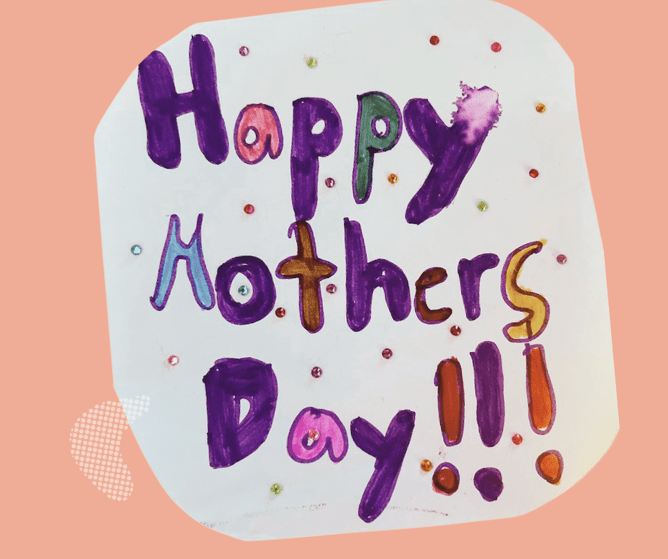
There is a card in my desk drawer that I've kept for two years. My daughter made it when she was seven - bubble letters in purple marker, stick-on gems pressed carefully across the cover, three exclamation marks after "Happy Mothers Day" because one would never have been enough.
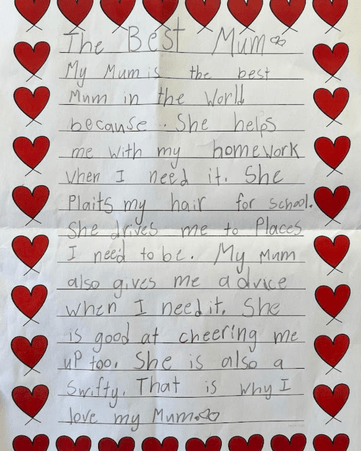
Inside, fifteen thick-drawn lines in her best handwriting. My mum is the best mum in the world because she helps me with my homework. She plaits my hair for school. She drives me to places I need to be.
And then, near the end: "She is also a Swifty. That is why I love my Mum."
I will keep it long after I've forgotten every gift I've ever been given.
Mother’s Day will arrive the way it always does. Announced by window displays and promotional emails, gift guides and limited-edition packaging. Retailers will do what retailers do. Some of it will be done well. Most of it will blur together by the following week.
But underneath the commercial noise, there’s something far more delicate going on.
Motherhood holds more than a campaign can carry
Motherhood, in all its forms, is deeply personal.
It’s layered and complex. For some, it’s a day of warmth and celebration. For others, it’s bittersweet. There are mothers who are no longer here. There are people who are longing to become mothers. There are families stitched together in unconventional, beautiful ways.
No one-size-fits-all message can hold all of that.
Which is why the brands that get it right on Mother’s Day aren’t the ones who sell hardest. They’re the ones who tell the truest stories. The quiet strength of a mother at 3am. The particular humour of a relationship that goes back decades. The love that doesn’t photograph well but never fades.
When a brand gets that right, something shifts. The transaction becomes secondary. People feel seen.
When good intentions aren’t enough
Most retailers aren’t trying to get Mother’s Day wrong. That’s worth saying. As I said recently about April Fools' Day marketing, the brands that misfire are meeting the brief rather than the moment.
A campaign brief lands in February, a mood board goes to the designer, and somewhere between the deadline and the sign-off, the humanity gets edited out.
Here’s how to tell if it’s happened to you.
Your campaign acknowledges complexity but doesn’t actually hold it. In recent years, many brands have started adding a quiet line to their Mother’s Day communications - something that nods to those for whom the day is difficult. Grief, loss, longing, estrangement. It’s a thoughtful instinct. But if that acknowledgement lives in a single sentence at the bottom of an email, surrounded by pink florals and “make Mum's day” copy, it isn’t inclusion. It’s a disclaimer. People who are navigating something hard on Mother’s Day will feel the difference between a brand that considered them and a brand that covered itself.
Your story is about the occasion, not the people in it. There’s a version of Mother’s Day marketing that could apply to any year, any brand, any mother on earth. Soft focus. Pastel palette. A woman laughing in a garden. It’s not wrong, exactly but it’s forgettable. And forgettable is its own kind of failure. The brands that cut through are the ones that get specific - on a detail, a dynamic or a moment that feels like it was written about a real person. That specificity is what makes someone stop scrolling and think: that’s us.
You’re asking people to buy something when what they actually need is permission to say something. Mother’s Day sits inside one of the most layered relationships most people will ever have. That relationship might be full of warmth - or it might be complicated, unresolved, marked by absence. The commercial version of the day flattens all of that into a transaction. Buy this, show her you care. But care isn’t always simple, and the people spending money on Mother’s Day know that better than any campaign brief does.
Sales matter but the brands that convert best on this day are the ones who understand what was actually at stake for the person standing in the aisle or scrolling at midnight. When a brand makes room for the complexity of motherhood - not in a footnote, but in the story it tells -something shifts. People feel seen. And people buy from brands that see them.
The most powerful storytelling doesn’t come from a brand
It’s a chance - maybe the only one some of us take - to say the things we often leave unsaid.
To turn everyday memories into something that lasts. To write the card, send the message, or make the call that simply says: I love you. I see you. I remember.
Not a campaign. Not a curated gift. Just the words that are yours. Imperfect, honest, specific to the person you’re saying them to.
Those are the ones that end up in desk drawers.
The best thing you can give on Mother’s Day isn’t wrapped. It’s the phone call you make instead of send a text. The meal you sit through without looking at your phone. The story you tell about why she matters - in your own words, to her face. Gifts mark the occasion. Words, presence, and genuine connection are the occasion. The rest is packaging.
If this resonates, you might also find this useful: Why April Fools' Day marketing has passed its prime - and what it tells us about the brands still mistaking noise for connection.